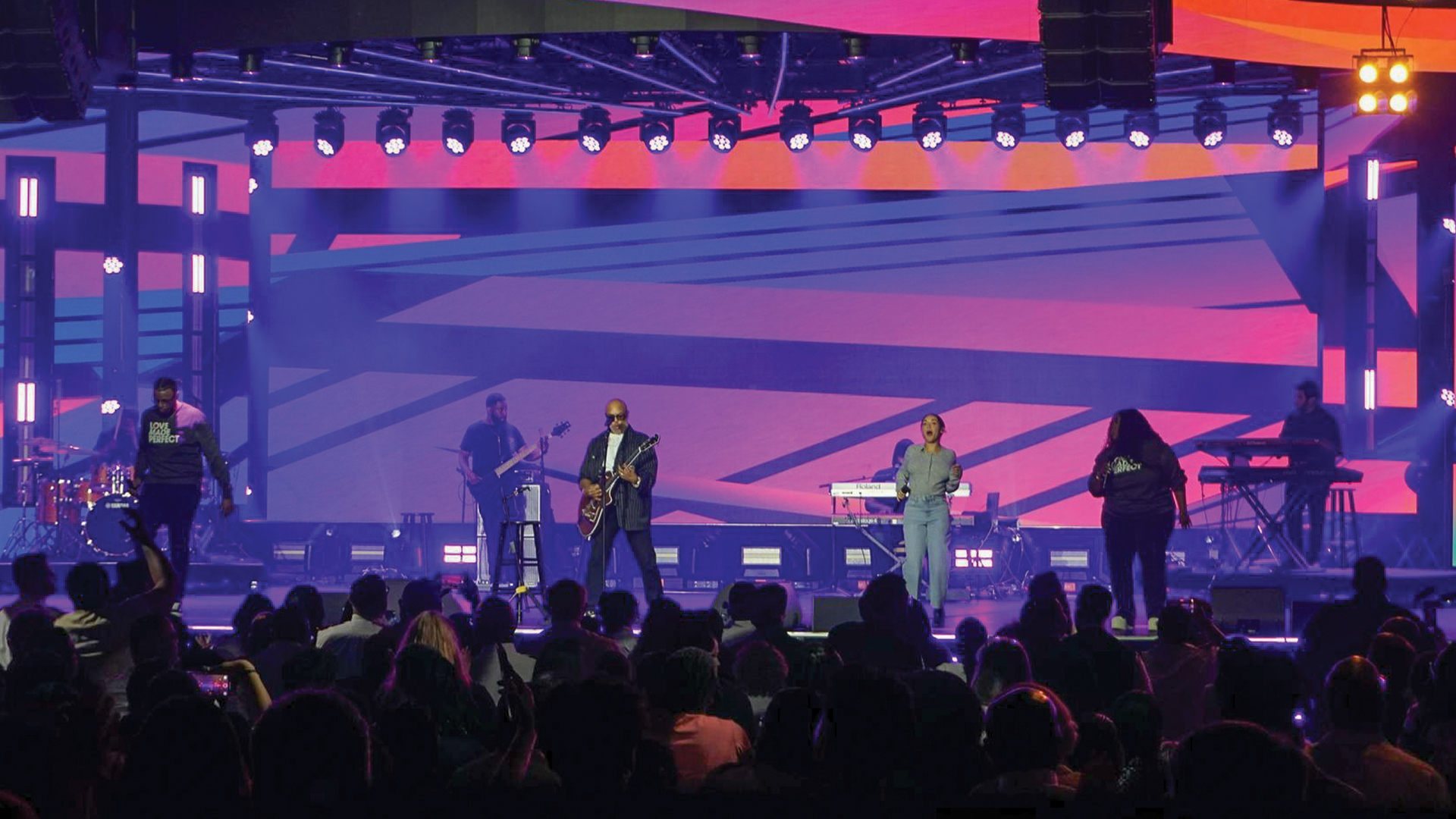
Selecting the wrong lighting fixtures for a touring production is not a mistake that reveals itself neatly at a single moment — it reveals itself across every city on the run, compounding through weight overages, power failures, maintenance nightmares, and output shortfalls that force your crew to compensate in ways that degrade the design. Choosing the right touring lighting fixtures is a decision with an operational lifespan measured in hundreds of show days, and the professionals who get it right have learned to evaluate fixtures across a set of criteria that goes well beyond raw output specifications.
The lighting fixture landscape for touring has been shaped by decades of hard-won industry experience. In the 1980s and early 1990s, touring rigs were built around PAR cans loaded with tungsten lamps — simple, inexpensive, and devastatingly heavy. The emergence of moving lights changed touring production permanently. The Vari-Lite VL1, developed in 1981 for Genesis’s Abacab tour, was the first programmable automated fixture used in rock touring — a development that restructured the entire discipline of touring lighting design and the economics of what a production could carry on a truck.
Weight and Power: The Touring Math Nobody Ignores Twice
Every experienced touring production manager runs the same calculation before approving a fixture spec: weight multiplied by quantity, added to the existing truck pack weight, measured against the axle weight limits and the generator capacity at the worst venue on the tour. A fixture that looks attractive on a spec sheet can become a logistical liability when multiplied by 60 units across a full touring rig.
The shift to LED-based moving lights has transformed this calculation. Fixtures like the Robe BMFL XT, Martin MAC Quantum Wash, and Claypaky Xtylos deliver output that previously required 1200-watt discharge lamps from a fixture consuming 200 to 400 watts with no lamp warm-up time, no lamp replacement schedule, and a fraction of the weight. The operational savings over a 40-week tour — in power consumption, lamp costs, and crew maintenance time — are substantial enough to justify a significant premium on the fixture purchase price.
Output vs. Application: Matching Fixture to Function
The single most common fixture specification error in touring is over-specifying output for mid-throw positions and under-specifying for long-throw ones. A profile spotlight deployed as a key light from FOH on a stadium stage needs a fundamentally different output spec than the same fixture type used as a side light on a club stage. The beam angle, lens options, and zoom range matter as much as the raw lumen figure.
For touring key lighting from long throws, the Robe BMFL Spot and GLP impression X5 have become standard references. For mid-range wash and aerial effects, the Martin MAC Aura XB and Elation Professional Proteus Hybrid offer the combination of output, zoom range, and feature set that covers most touring applications. For specialized beam effects, the Claypaky Sharpy Plus and GLP JDC1 have earned fixture-of-choice status on major touring productions for their distinctive aerial looks that hold up at any scale.
Maintenance Realities on the Road
Fixtures on a touring rig are not maintained in a controlled workshop environment — they are maintained by crew members working between shows, often in loading docks, parking lots, and venue corridors with minimal tooling and limited time. A fixture that requires specialized tools or factory service for basic maintenance is a fixture that will create operational problems on a long run. Ease of field serviceability is a specification criterion that rarely appears in manufacturer marketing materials but is discussed extensively among touring crew.
Robe fixtures have earned a strong reputation for field-serviceable design. ETC Source Four LED Series 3 fixtures are similarly regarded as straightforward to maintain in touring conditions. Manufacturers that supply comprehensive touring spare kits — containing the PCBs, motor assemblies, and optical components most likely to fail over a long run — are providing a meaningful operational service that extends the effective reliability of the rig beyond what the fixture specification alone suggests.
Fixture Compatibility With Console and Protocol
The fixture’s compatibility with the lighting console and control protocol in use is a specification criterion that production teams sometimes address late in the process, with predictable consequences. Every moving light requires an accurate DMX personality library entry in the console — or in the case of grandMA3 and ETC Eos, a GDTF (General Device Type Format) profile — that correctly maps every fixture parameter to the console’s control architecture. Fixture models that lack accurate GDTF or manufacturer-supplied library files create programming overhead that costs hours during a compressed advance production period.
The GDTF standard, developed collaboratively by MA Lighting, Robe, and Vectorworks, has significantly improved this situation since its introduction — most major fixture manufacturers now publish GDTF profiles, and the gdtf-share.eu repository provides a centralized access point. But fixture compatibility verification should still happen before procurement, not after the truck is loaded.
Rigging Requirements and Touring Safety Standards
Every fixture on a touring rig will be rigged by a certified rigger who is legally responsible for its safe installation. Fixtures that exceed published rigging point weight limits, that have non-standard attachment geometries, or that require specialized rigging hardware unavailable in regional rental markets create compliance and safety problems at every venue. This is a specification dimension that designers who primarily work in fixed installation sometimes miss when they transition to touring work.
The safety cable (safeload) requirement is universal on touring productions — every fixture must carry a rated secondary attachment capable of holding the fixture’s weight independently of the primary rigging point. Fixture manufacturers who include properly rated safety attachment points as a standard feature, rather than an accessory, are building touring-appropriate hardware that reflects the operational realities of the market they serve.
Building the Fixture Spec as a System
The most effective touring fixture specifications are not assembled fixture by fixture — they are designed as systems with intentional interoperability. Fixtures from the same manufacturer family often share spare parts, power supplies, and control boards, meaning that a failure in one fixture type can be addressed with parts pulled from another. This interoperability is an operational advantage on long tours where carrying spare parts for a dozen different fixture types is logistically impractical.
Major touring production companies — PRG, Neg Earth Lights, Christie Lites, and TAIT — have developed preferred touring fixture ecosystems based on exactly this kind of system-level thinking. The fixture choices they make on major touring contracts reflect years of operational data about what performs reliably, services easily, and integrates cleanly across the full production chain. For anyone building a touring rig from scratch, those preferences are worth studying as carefully as any manufacturer spec sheet.
