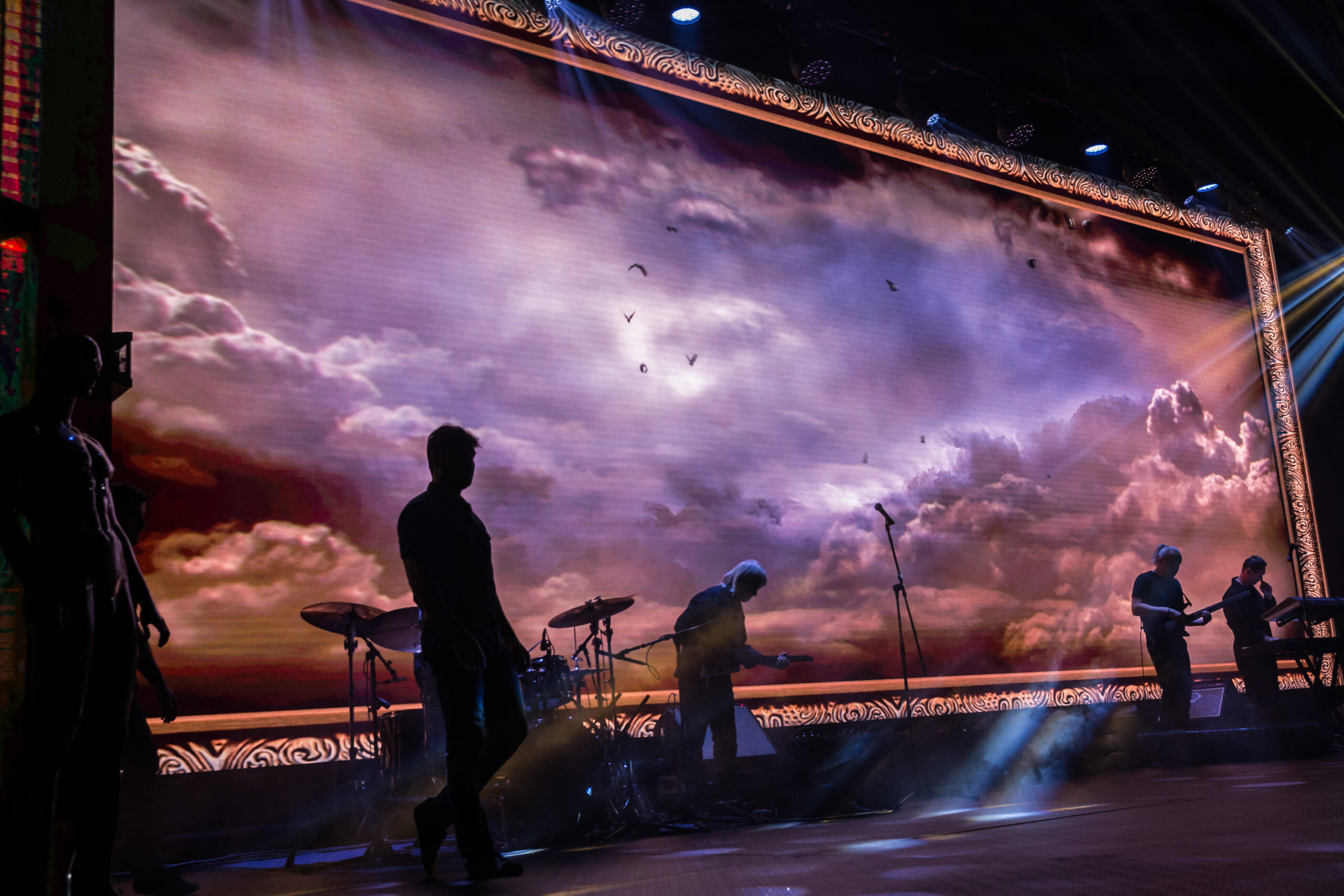
Camera operators who work live events develop lens preferences that are so specific, so refined by experience, and so grounded in the operational realities of live production, that they can seem almost irrational to outsiders. Ask a seasoned IMAG camera operator why they insist on a specific lens for a specific show type and the answer will rarely reference the specification sheet — it will reference the feel, the behavior under pressure, and the ways that particular glass handles the conditions that live production routinely creates and that controlled studio shooting never replicates.
The history of broadcast lens development is a history of engineering increasingly capable glass for increasingly demanding live production environments. Canon’s Digisuper series, Fujinon’s HA and XA series, and Angenieux’s EZ series zoom lenses represent decades of refinement driven directly by the operational feedback of camera operators working live sports, concerts, and broadcast events. The preferences those operators have developed are the accumulated output of that feedback loop made personal and professional.
Zoom Range vs. Maximum Aperture: The Fundamental Trade-Off
Every lens decision for live production begins at the same trade-off: zoom range versus maximum aperture. A long zoom range — the 20:1 or higher ratios offered by broadcast box lenses from Canon DIGISUPER 100 or Fujinon UA107 — provides operational flexibility that is genuinely irreplaceable on events where camera positions are fixed and subject distances vary widely. The same lens that covers a tight close-up on a presenter at a podium can cover a wide establishing shot of the full stage without moving the camera.
But that zoom range comes at a cost in maximum aperture. A 100:1 broadcast box lens might have a maximum aperture of T4.5 or slower at the long end — a significant limitation in the low-light conditions that characterize most live concerts and theatrical productions. The cinema prime lens — a Zeiss Supreme Prime, Cooke S7/i, or Leica Summilux-C — offers apertures of T1.5 or wider, but with no zoom range whatsoever. For most live event coverage, the working answer is a broadcast zoom with a fast maximum aperture — a specification that drives up the cost and weight of the glass but is the only way to maintain operational flexibility in genuinely dark shooting conditions.
Focus Characteristics Under Live Conditions
The focus behavior of a lens under live production conditions is a dimension that camera operators rate as highly — often more highly — than optical resolution performance. A lens that is technically sharp but has a focus ring with inconsistent resistance across its travel, or that exhibits focus breathing (a change in focal length as focus is adjusted) that disrupts framing during pulls, creates operational problems that technically excellent glass shouldn’t. On a live show where a camera operator is following an unpredictable presenter while simultaneously framing for a program cut, focus behavior is a tactile, reflexive skill — and the lens has to support that skill rather than fight it.
The Fujinon Cabrio series lenses have earned strong reputations among live event camera operators specifically for their manual focus feel — consistent resistance, minimal breathing, and sufficiently long focus rotation to allow precise adjustments at medium throws. Canon’s cinema EOS zoom series and ARRI/Zeiss Lightweight Zooms are similarly regarded for their smooth, controlled focus mechanics that hold up under the physical demands of live production work.
Color Rendering and Match Across Multiple Cameras
On any multi-camera live production, the color rendering consistency across all lenses is a production-critical specification. A cut between two cameras fitted with lenses that have different color rendering characters — different color temperature biases, different contrast curves, different flare characteristics — produces a visible discontinuity on screen even after careful shading work by the camera control engineer. This is why major live productions use matched lens sets rather than mixing lens families across cameras.
The Fujinon HA series broadcast zooms are used in matched sets on many large-scale live events precisely because their color rendering is consistent across the range. The same philosophy drives the preference for matched cinema prime sets — Master Primes, Signature Primes, or ARRI/Zeiss Standard Speeds — on productions where the cinematic look demands primes rather than zooms. A shader operator working a six-camera live show can compensate for a significant amount of exposure and color variation between cameras, but their ability to compensate for fundamentally different tonal rendering characters in the glass is limited.
Stabilization for Live Handheld and Shoulder-Mount Work
Handheld and shoulder-mount camera operation in live production creates demands on lens optical stabilization systems that static tripod-mounted broadcast work does not. The IS (Image Stabilization) or OIS (Optical Image Stabilization) systems in lenses like the Canon CJ Series broadcast zooms and the Fujinon ZA Series are specifically tuned for the type and amplitude of motion that comes from shoulder-mounted camera operation — and camera operators who work both handheld and tripod-mounted positions in the same show learn to evaluate stabilization behavior under both conditions, not just one.
Extenders and Adapters in Live Situations
Range extenders — 1.5x and 2x optical doublers that mount between lens and camera body — are a standard part of the live broadcast lens toolkit for situations where subject distance exceeds the unextended reach of the primary lens. Both Canon and Fujinon broadcast box lenses include integrated extenders accessible via a dedicated ring on the lens barrel, allowing the camera operator to extend focal length without breaking the camera mount.
The trade-off is a light loss of 1 to 2 stops depending on the extender factor, which in the low-light conditions of concert and theatrical production can push the system to the edge of acceptable image quality. Camera operators who work frequently with extenders develop a precise sense of the exposure threshold at which the light loss from the extender and the sensor noise from the gain required to compensate start costing more than the focal length advantage is delivering — and they adjust their working method accordingly.
The Personal Preference Factor
Behind every lens preference an experienced camera operator expresses is a body of accumulated operational knowledge that is difficult to fully articulate. The preference for a specific broadcast zoom reflects experience across dozens of shows in varying conditions — low light, fast subject movement, difficult follow-focus situations, side-lit stages that expose every chromatic aberration the glass carries. These preferences are not irrational or arbitrary. They are performance data expressed as intuition, refined through years of working in conditions that reveal what a lens can genuinely do when the show demands more than ideal operating conditions deliver.
