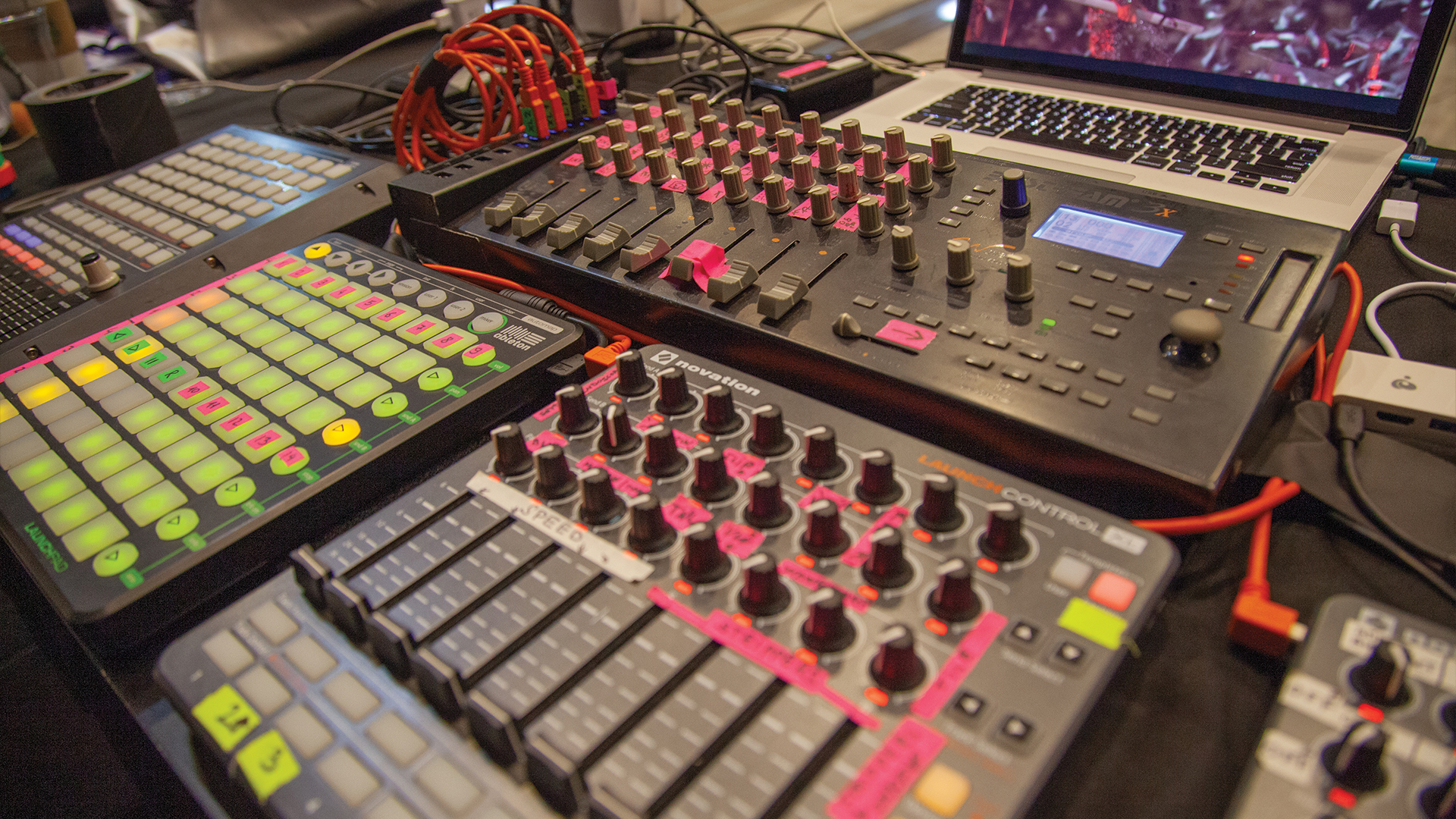
Few technological inflections have reshaped live production as profoundly as the widespread adoption of digital mixing consoles. The shift from analog to digital audio mixing was not merely a change of surface — it was a fundamental restructuring of how audio systems are designed, networked, recalled, transported, and operated. The productions of 1995 and the productions of 2005 were built on entirely different operational logic, and that discontinuity traces directly to the digital console revolution.
The Analog Era: Physical Infrastructure as the System
The great touring consoles of the analog era — the Midas XL4, Cadac J-Type, Neve V3, SSL 4000 Series — were magnificent machines, but also massive, heavy, and operationally inflexible. The Midas XL4 weighed approximately 170kg and required a dedicated flight case that could fill an entire truck bay. Every mix existed only in the physical position of faders, trim pots, and EQ knobs — there was no recall, no snapshot, no scene memory. If the opening act’s sound engineer touched the FOH desk, the headliner’s engineer spent the first 20 minutes of their set rebuilding a mix from tactile memory.
The Arrival of Digital: Yamaha and the PM1D
The Yamaha PM1D, launched in 1999, was not the first digital console, but it was the first to demonstrate that large-format digital mixing was viable at the top level of touring production. Initial resistance was fierce. Engineers who had spent careers developing tactile muscle memory on analog consoles found the PM1D’s preamp quality unsatisfying compared to their Neve and SSL reference points. But the scene recall, processing density, and the ability to route any input to any output in software began converting skeptics show by show. By 2003, the Yamaha PM5D had established digital consoles as the new standard for arena touring.
Show Files: The Operational Revolution
The show file — the digital document that stores every parameter of a console’s configuration — changed production workflow permanently. For the first time, an engineer could save the complete state of a mix, carry it to the next city, load it onto a different console of the same model, and begin from a reliable baseline. The advance file workflow that is now standard practice — where the FOH engineer creates and refines a show file in a hotel room using the console’s offline editor software — was simply impossible in the analog era. DiGiCo’s offline editor, Yamaha’s CL Editor, and Midas’s Pro Series offline software extended the production environment from the venue to wherever the engineer had a laptop.
Network Audio: From Snake to Cat5e
The digital console’s ability to interface with digital audio networks eliminated one of the most expensive elements of analog touring: the analog multicore snake. A conventional 48-channel analog snake was replaced by a single CAT6 cable carrying 64 or more channels of Dante or MADI audio in both directions simultaneously. The Dante Virtual Soundcard protocol, developed by Audinate, eventually made it possible for any laptop or workstation to become a node on the audio network — transforming broadcast integration, recording feeds, and multi-position mixing workflows for corporate and theatrical production.
Plugin Processing and Outboard Extinction
The analog touring production carried racks of outboard processing — Empirical Labs Distressor compressors, Lexicon 480L reverbs, dbx 160A limiters — wired into the console via hardware inserts. The digital console absorbed all of these functions internally, or via virtual plugin platforms. Systems like Waves SoundGrid and SSL Live Plugin suite, running on dedicated servers connected to the console, provided emulations of classic outboard hardware with effectively unlimited instance counts. The result was a radical reduction in touring rack size, weight, and physical complexity.
The Monitor World Transformation
Perhaps no production role was transformed more completely by digital consoles than the monitor engineer. In the analog era, monitor mixing required a dedicated large-format console — typically a Clair Brothers iMix or Midas Heritage 3000, positioned stage left or stage right — plus racks of outboard EQ for every artist wedge mix. The arrival of digital monitor platforms — particularly the DiGiCo SD10 and Yamaha PM5D-RH — allowed the monitor engineer to operate with parametric EQ, compression, limiting, and delay on every bus from a single surface, with complete scene recall between acts.
Integration With Video and Lighting Networks
As digital consoles matured, their connectivity expanded beyond audio to encompass integration with the broader AV production ecosystem. MIDI, OSC, and Ethernet-based control protocols, output by consoles like the Avid S6L and SSL Live L550, allowed show cues to trigger lighting console snapshots on the grandMA3 or fire video playback events on a Resolume Avenue, synchronizing the entire production from a single operational trigger. This cross-system integration is now considered a baseline expectation for professional touring production, effectively making the digital audio console the nervous system of the entire show.
What Was Lost, and What Was Gained
The transition to digital has not been without genuine loss. The tactile transparency of a well-maintained Neve 8078, the organic harmonic character of analog summing, and the simple operational immediacy of a physical knob that does exactly one thing are qualities that digital consoles have historically approximated rather than replicated. The professional audio industry’s sustained interest in analog-modeled plugin processing, transformer-balanced preamps, and hybrid analog/digital workflows reflects a recognition that the efficiency gains of digital production are most valuable when the sonic foundation is managed with care.
Produced for AV Industry Insight | © 2025 All Rights Reserved
