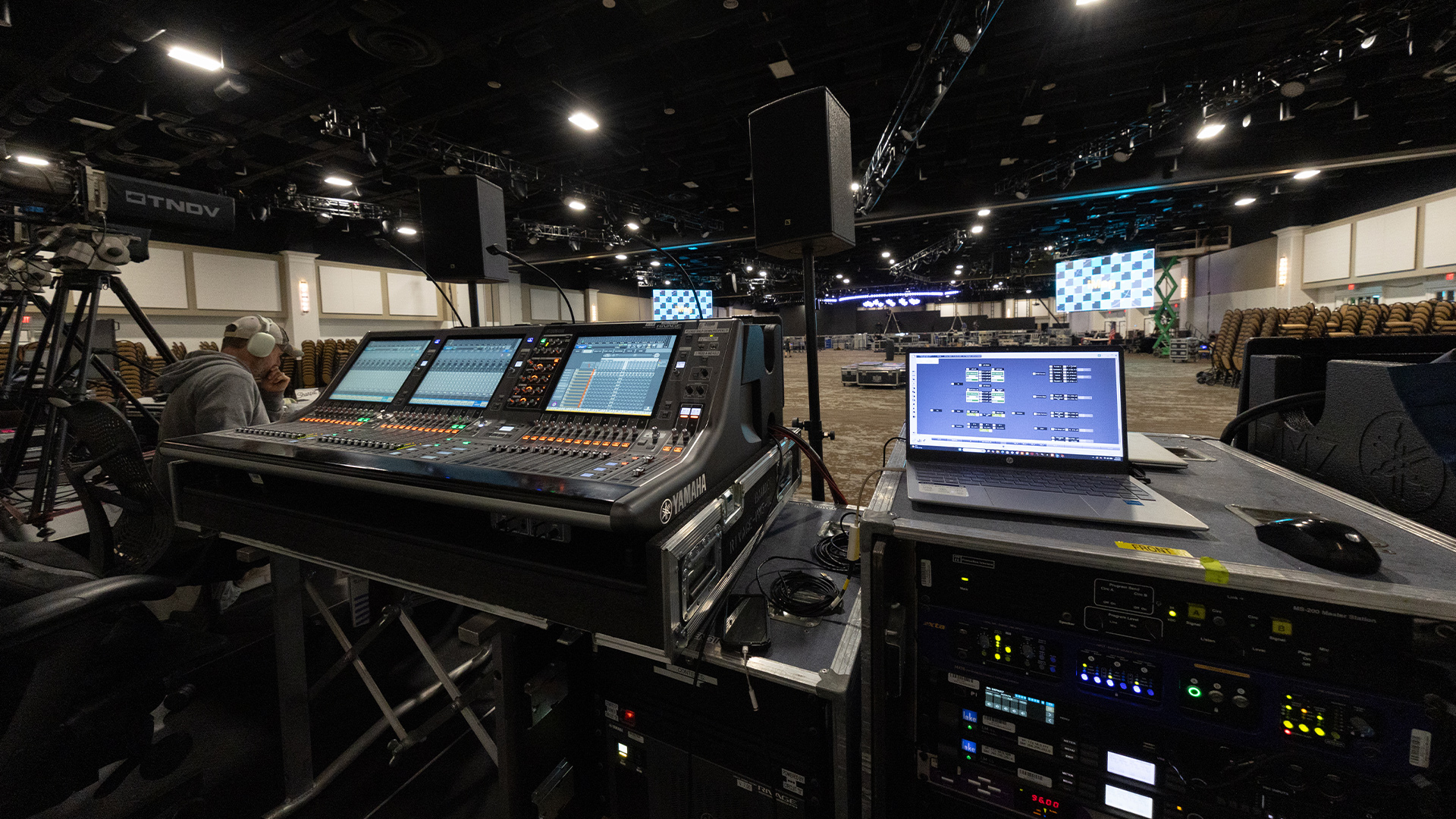
A multi-day concert series — three, four, or five nights in the same venue with different performance content each night — presents a lighting programming challenge that single-night productions never encounter. The same rig must serve multiple different creative visions, typically with minimal or no production reset between nights, managed from a grandMA3 session that contains all programming simultaneously without the organizational complexity becoming operationally unmanageable. The techniques that experienced lighting programmers use to navigate these requirements — and the grandMA3 architecture that supports them — define a programming discipline that is distinct from both single-show touring and continuous festival operation.
Session Architecture: Organizing Multiple Shows in One File
The foundation of grandMA3 programming for a multi-day concert series is the session organization architecture — the way in which the show files for different nights coexist within a single session without interfering with each other or creating confusion for the operator during show execution. The dominant approach among experienced programmers is the executor page system: each night’s complete show programming occupies a dedicated executor page on the grandMA3 console, with consistent executor positions across all pages — executor 101 is always the opening sequence, executor 201 is always the ballad sequence — so that the operator’s muscle memory from night one translates directly to nights two, three, and four. This architecture requires significant upfront planning but produces enormous operational efficiency as the series progresses.
Selective Programming: The Architecture of Flexibility
The selective programming discipline — writing lighting cues that contain only the parameters actively changed at each cue point, allowing all other parameters to persist from their current state — is even more critical in multi-day concert programming than in single-show contexts. When a shared rig serves multiple nights’ worth of shows, a cue from Night Two that inadvertently overwrites the look established by a Night One cue — because the Night Two cue was written as an all-parameters store rather than a selective store — can corrupt the Night One programming in ways that are not discovered until Night One runs again. The grandMA3 store options — specifically the difference between Cue Only, Selective, and All store modes — are therefore the most operationally significant settings on the console for a programmer working on a multi-day show, and senior programmers establish a project-wide store mode discipline before the first cue is written.
The grandMA3 Effects Engine in Multi-Night Context
The grandMA3 effects engine — the platform’s tool for generating dynamic, repeating lighting patterns across groups of fixtures — provides multi-day series programmers with a powerful efficiency tool that reduces cue count while increasing visual variety. A single programmable effects sequence running on a group of Robe BMFL moving heads, cycling through a defined color palette and pan/tilt wave pattern, can serve as the basis for dozens of cue variations across multiple nights by modifying its speed, size, phase offset, and group selection rather than building unique cues for each variation. Gradient phase effects — in which each fixture in a group has its effect phase offset calculated as a proportion of its position in the group, producing a smooth traveling wave across the entire fixture selection — are a signature visual technique that multi-day concert programmers use to create visually dynamic environments with minimal cue-writing time.
Multi-Night Artist Collaboration: When the Artists Change
The most complex multi-day series programming challenges arise when different headline artists perform on different nights, each with their own lighting design preferences and production specifications. A shared rig must be reprogrammed between nights to serve each artist’s specific look — while the core rig infrastructure, rigging positions, and DMX address assignments remain constant. Lighting programmer collaboration workflow for multi-night shared-rig events has evolved into a defined practice in which each artist’s lighting director provides a grandMA3 show file or cue list import prepared on a virtual show environment matching the shared rig’s actual fixture patch. The grandMA3 Import function allows these externally prepared cue lists to be added to the shared session’s executor page structure without disturbing the existing programming for other nights. The import verification process — confirming that fixture addresses, group definitions, and preset references translate correctly from the source file to the destination session — is the critical quality control step.
Timecode in Multi-Night Context: When Songs Change Nightly
SMPTE timecode automation in a multi-night concert series introduces a layer of complexity that single-night productions don’t face: the timecode-driven cuelist for Night One may contain hundreds of locked cue triggers that are irrelevant or actively problematic for Night Two’s set list. The management approach that most production programmers adopt is timecode island isolation — containing all timecode-driven automation within dedicated executor pages for each night, with the timecode engine configured to drive only the active night’s executors. The grandMA3 timecode system supports this through its timecode assignment function, which specifies which executors respond to which timecode source. A second timecode source — typically MIDI clock from the band’s click track — drives the effects engine’s BPM sync function independently of the show-specific timecode, allowing tempo-synchronized effects to operate correctly regardless of which night’s programming is active.
Case Study: Five-Night Residency, Madison Square Garden
A five-night sold-out residency at Madison Square Garden — the career-defining achievement that contemporary artists of the highest tier aspire to — presents multi-night programming challenges at their most extreme. The lighting production for such a residency typically deploys a rig of 600-1,000 moving heads, LED battens, and effect fixtures, with a grandMA3 session containing complete unique shows for each of the five nights plus additional programming for pre-show, intermission, and post-show environments. LD Systems’ Bob Barnhart, a veteran of multiple MSG residency productions, has described the session management approach he uses: a master template cuelist that establishes the consistent rig default state between shows, from which each night’s programming departs, ensures that any change to a shared fixture’s base state is reflected across all nights simultaneously — preventing the cumulative drift between nights’ programming that can develop when they are managed as entirely independent show files.
The Next Generation: Modular Programming Architecture
The evolution of grandMA3 programming for multi-day concert series is trending toward increasingly modular architectures — in which individual musical sequences, artist-specific preset palettes, and shared environmental looks are built as independent modules that can be assembled, disassembled, and reassembled across different nights’ shows with minimal rework. The grandMA3 Fixture Group Macros system, which allows complex group-selection and effect-application operations to be executed with a single command line instruction, supports this modular approach by allowing programmers to apply module components to any fixture selection across any night’s programming rapidly. The long-term direction — consistent with the broader creative technology industry’s move toward component-based content architectures — is a programming environment where a multi-day concert series is assembled from a library of verified, production-tested modules rather than built from scratch for each night. This approach trades the bespoke craftsmanship of traditional show programming for the efficiency and reliability of systematic modular construction — a trade that the economics of multi-night touring productions increasingly demands.
