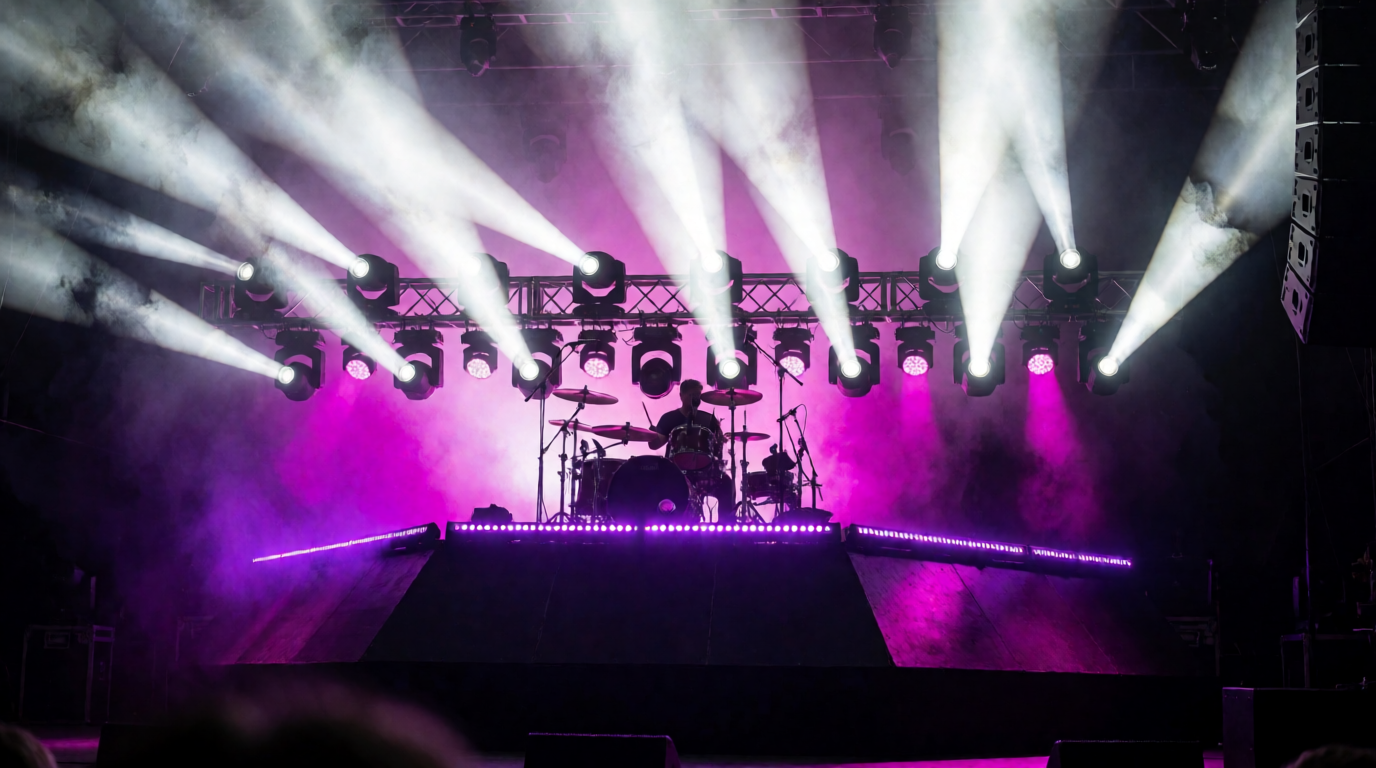
The truck door opens and the production meets the sky. A pallet of LED tiles sits at dew point, a rack of media servers waits in direct sun, a console rolls across gravel that looks harmless until the casters find it, and a thin gray cloud drifts in from the west with the confidence of a bill collector. Outdoor load-in is the most vulnerable moment in a production’s life, because gear that survived the shop and the highway must now survive the open air while it is uncased, unpowered, and unprotected.
Outdoor Shows and Their Early Casualties
Outdoor production has always paid for its optimism. The Monterey Pop Festival in 1967 helped invent the modern outdoor music event, and the decades that followed taught crews harsh lessons about rain, dust, and heat. As equipment grew more electronic, the vulnerabilities multiplied. A ROE Visual tile or a disguise server is a precision instrument, and the people who protect them outdoors have turned weather management into a department of its own.
Plan the Load-In Around the Weather
Protection begins with the forecast and the schedule. Study the hourly forecast from services such as DTN, Weather Underground, or MeteoGroup, and identify the likely windows of rain, wind, and heat. Schedule the most sensitive deliveries, such as LED walls, video racks, and audio consoles, for the most favorable window.
Be ready to reorder the sequence. If rain is due at three, push structural work and rigging earlier, and hold electronics until the sky clears or a tent is ready. A load-in plan that cannot flex with the weather is a plan that will fail in public.
Create a Dry Zone Before Anything Arrives
The single best investment is a protected staging area. Erect tents, stretch tents, or covered trailers near the dock, and floor them with pallets, ground protection, or decking to keep cases off wet ground. A dry zone gives electronics somewhere safe to wait.
Size the zone for the most vulnerable gear: LED tile cases, video racks, audio racks, console cases, and lighting consoles. Add sidewalls to block wind-driven rain, and drainage channels to keep water moving away. A tent rented for two hundred dollars can save a ten-thousand-dollar processor.
Keep Cases Closed Until They Are Needed
A road case is the first line of defense. Keep cases closed as long as possible, and open them only when the work area is ready. Many outdoor damage incidents occur because cases sit open for convenience, taking in rain, dust, and debris.
Use protective covers, such as rain sleeves or case covers, for cases that must wait outside. Store LED panel cases on pallets, not directly on the ground. Rotate desiccant packs, and keep foam dry. A closed, elevated case is a small, portable weather shelter.
Respect Condensation and Thermal Shock
A cold case brought into warm, humid air collects moisture, and thermal shock can damage electronics powered too soon. Let gear acclimate before power-up, following manufacturer guidance, which often calls for an hour or more for large temperature differences.
Never power LED tiles, processors, or servers that are visibly wet or cold. Open the case, let air circulate, and wipe surfaces with lint-free cloths. For humid climates, consider portable dehumidifiers inside tents. A patient hour avoids a failure that might surface weeks later.
Manage Dust, Sand, and Debris
Dust is an enemy with patience. Fine particles infiltrate fans, connectors, lenses, and sliders, and on dry festival grounds they travel by wind and foot traffic. Dampen dirt roads where possible, and use ground cover or mats to reduce dust.
Cover moving lights, LED faces, and projector lenses until needed. Keep compressed air, brushes, and microfiber cloths handy, and clean connectors before mating. After the event, inspect fans and vents, and clean thoroughly before the next show. Dust that is ignored becomes heat, and heat becomes failure.
Protect Against Sun and Heat
Sun is a quiet destroyer. Black cases and dark LED faces absorb enormous heat, and equipment left in direct sun can reach temperatures that shorten life or cause shutdown. Use shade tents, white tarps, or reflective covers to protect gear during load-in.
Keep laptops, tablets, and batteries out of the sun. Lithium batteries, in particular, degrade quickly at high temperatures, and can become unsafe. Store them in shaded, ventilated containers, and avoid charging in direct heat.
Handle Wind With Respect
Wind turns everything into a sail. Cardboard, foam, drape, tarps, and scenic panels can become projectiles. Secure loose items with ratchet straps, sandbags, and tie-downs, and never leave uncontrolled pieces unattended.
During load-in, monitor wind speed with an anemometer such as a Kestrel 5500. Define thresholds for pausing work, particularly for lifting and rigging. A protected load-in plan includes wind rules for forklifts, trusses, and LED panels.
Use the Ground Wisely
Ground conditions decide how safely gear moves. Mud, gravel, and grass can trap casters and tip cases. Use trackway from Terraplas or ground protection mats along main routes, and provide ramps and dollies with large wheels.
Avoid placing cases directly on wet grass, which transmits moisture and can stain foam. Stage on pallets, decking, or plywood. Plan vehicle routes that avoid soft ground, and keep forklifts on stable paths.
Protect Power and Data Connections
Connectors suffer outdoors. Power, data, and fiber connectors can fail when wet or dirty. Use weatherproof connectors, such as Neutrik powerCON TRUE1 Top, and keep dust caps on until mating. Elevate distribution boxes and junctions, and use cable ramps and drip loops.
Do not coil energized cable in wet areas. Place power distribution on pallets or racks, with covers and drainage. Verify GFCI and RCD protection before powering. A few simple habits prevent expensive shocks.
Assign a Gear Guardian
Protection needs ownership. Assign a gear guardian or load-in safety lead with authority to stop work, call for covers, or re-sequence tasks. Equip them with radios and a weather kit: tarps, tape, sandbags, straps, and ponchos.
Brief the crew on protection rules: cases closed, gear off the ground, tarps ready. A shared culture of care is more reliable than a poster on the wall.
Document and Improve
After load-in, review what worked and what almost failed. Photograph damage and near misses, and update procedures. Track weather impacts on schedule and cost.
Share findings with clients and vendors. When clients see that protection requires tents, labor, and time, they are more likely to approve the budget. Clear data supports smart decisions.
Practical Takeaways
Plan around the forecast, create a dry zone, and keep cases closed. Manage condensation, dust, sun, and wind, and use ground protection. Protect connectors, assign a gear guardian, and document lessons.
The Bottom Line
Protecting sensitive gear during outdoor load-in is respect for the environment’s power. When the crew treats weather as a planned variable, expensive equipment stays safe and the show stays on schedule. The audience never sees the tents and tarps, only a stage that appears ready to perform.
