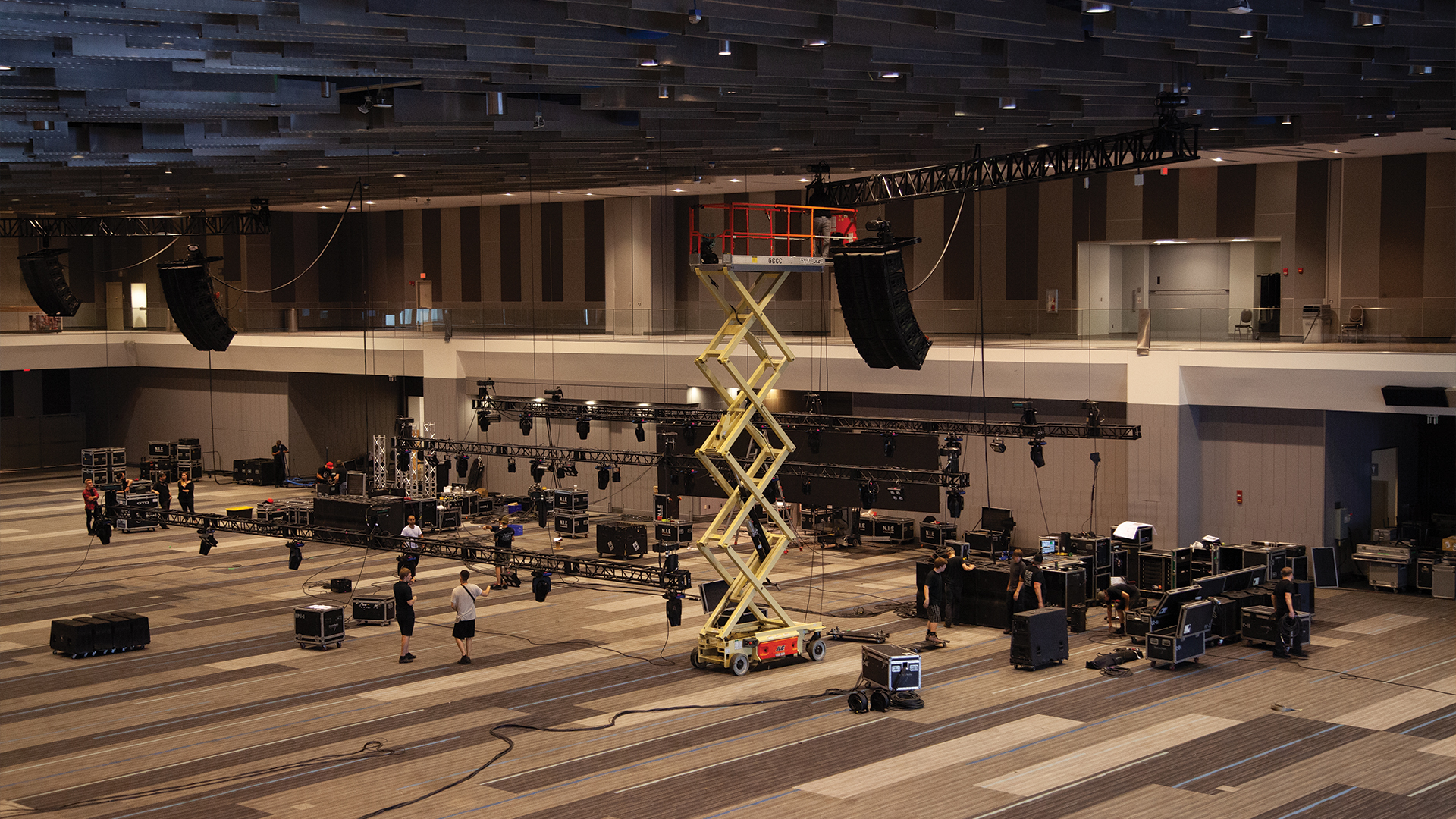
Outdoor festival production represents the highest-stakes gambling in live entertainment. You wager millions in equipment, weeks of planning, and an artist’s reputation against weather patterns that meteorologists can only approximate. When the monsoon arrives—not if, but when—the production team‘s preparation determines whether the show becomes legendary or catastrophic.
The Anatomy of Weather Warfare
Every major outdoor concert tour employs dedicated weather monitoring services that track conditions with military precision. Companies like DTN Weather and Weather Decision Technologies provide production managers with radar updates, lightning strike probability maps, and wind forecasting that updates every fifteen minutes. The tour manager watches these predictions with the intensity of a battlefield commander reviewing enemy troop movements.
The 2017 U2 Joshua Tree Tour demonstrated masterful weather management when a severe thunderstorm cell developed hours before their São Paulo stadium show. The production crew initiated emergency weather protocols that had been refined over decades of outdoor touring. Delay announcements went to eighty thousand attendees while riggers assessed wind load on the massive stage structure. The band performed to a crowd that had weathered the literal storm, creating one of the tour’s most memorable nights.
Equipment That Embraces the Elements
Serious outdoor touring equipment comes with IP ratings that specify water and dust resistance. The L-Acoustics K2 line array system includes IP55-rated cabinets designed to deliver consistent performance whether deployed in desert heat or coastal humidity. The Meyer Sound LEO family features similar weatherization that allows operation in conditions that would destroy unprotected electronics.
Lighting fixtures face particularly brutal environmental challenges. The Robe MegaPointe and Clay Paky Mythos 2 incorporate weather-sealing that protects optics and electronics from rain infiltration. Even with these protections, experienced lighting directors know that sustained heavy rain will eventually compromise any fixture. The question becomes how long you can operate before reaching that threshold.
The Tarp Team Symphony
Professional staging companies maintain vast inventories of weather protection equipment. Stageline and Mega Stage mobile stages include integrated roof systems that shield performers and equipment, but supplementary protection requires precision choreography. Stage crews deploy tarps, custom rain shields, and protective covers with speed that suggests extensive rehearsal—because extensive rehearsal is exactly what separates successful weather management from expensive disaster.
The console position requires particular attention during weather events. Front-of-house mixing positions often sit exposed in stadium fields or festival grounds, leaving six-figure DiGiCo SD7 and Yamaha PM10 consoles vulnerable to precipitation. Production teams construct elaborate tent structures around these positions, complete with backup power systems in case lightning strikes force disconnect from main distribution.
Historical Deluges and Industry Lessons
The Woodstock Festival of 1969 established the template for weather-challenged productions when rain transformed the site into a mud sea. That legendary gathering operated without the sophisticated infrastructure modern events employ—no weather tracking systems, minimal equipment protection, and a PA system that Bill Hanley designed to survive conditions that destroyed all reasonable expectations.
Five decades later, the industry learned additional lessons when severe weather struck festivals worldwide. The 2011 collapse at the Indiana State Fair, caused by wind gusts from an approaching storm, killed seven people and prompted complete reevaluation of temporary structure safety protocols. Modern outdoor productions now incorporate wind speed triggers that mandate immediate evacuation procedures—non-negotiable thresholds established through tragic experience.
The Power Protection Imperative
Electrical systems represent the most critical vulnerability during severe weather. The temporary power distribution for major tours includes Aggreko generators and Power Logistics systems capable of supplying megawatts of clean electricity. These installations incorporate sophisticated ground fault protection and weather-rated connections that prevent the catastrophic failures that plagued earlier outdoor events.
Lightning creates the most immediate danger. Strike detection systems establish countdown protocols that halt outdoor activities when lightning moves within designated ranges. The 30/30 rule—seek shelter when lightning follows thunder within thirty seconds, remain sheltered for thirty minutes after the last strike—provides baseline protection for both audiences and production personnel. No show, regardless of economic pressure, proceeds when lightning threatens.
Communication Infrastructure
Weather management requires communication systems that remain operational when everything else fails. Production teams deploy Motorola digital radio networks and Clear-Com Eclipse intercom systems with redundant channels dedicated to weather response coordination. When the storm hits, every department head must receive simultaneous information about shelter protocols, equipment protection priorities, and evacuation procedures.
The production office transforms into a command center during weather events. Video feeds from site cameras display conditions across the venue. Radio traffic increases exponentially as departments report status and request resources. The production manager coordinates responses while maintaining communication with local emergency services, venue management, and artist representatives who anxiously await word about whether the show will proceed.
The Post-Storm Recovery Protocol
Surviving a weather event marks only the beginning of recovery operations. Technical directors initiate systematic equipment inspections once conditions clear. Every moving head fixture requires function testing. Audio systems undergo signal path verification. Power distribution gets inspected for water infiltration and ground integrity. The inspection process can consume hours, compressing already tight production schedules.
The site itself demands attention. Stage surfaces that absorbed rain become slip hazards requiring treatment. Audience areas transform into mud fields that complicate crowd management. Parking lots that doubled as vendor staging become vehicle traps. The site operations team coordinates with local contractors for emergency drainage, surface stabilization, and the thousand small interventions required to make a weather-beaten venue showable.
The Resilience Dividend
Tours that survive monsoons develop institutional knowledge that becomes competitive advantage. Production crews who have managed weather crises bring confidence and experience to subsequent events. Equipment specifications evolve to emphasize weatherization features that casual rental houses might overlook. Advance planning incorporates weather contingencies that less experienced operations might dismiss as excessive caution.
The AV production industry measures professional maturity partly by weather response capability. Companies that can deliver productions regardless of meteorological interference command premium rates and client loyalty. The investment in weather-ready equipment, trained personnel, and comprehensive planning pays dividends that extend far beyond any single storm.
When the skies open and the monsoon arrives, the production that survives demonstrates mastery over variables that cannot be controlled—only anticipated, prepared for, and ultimately overcome through the accumulated expertise of professionals who have learned that weather represents just another challenge in the endless improvisation of live event production.
