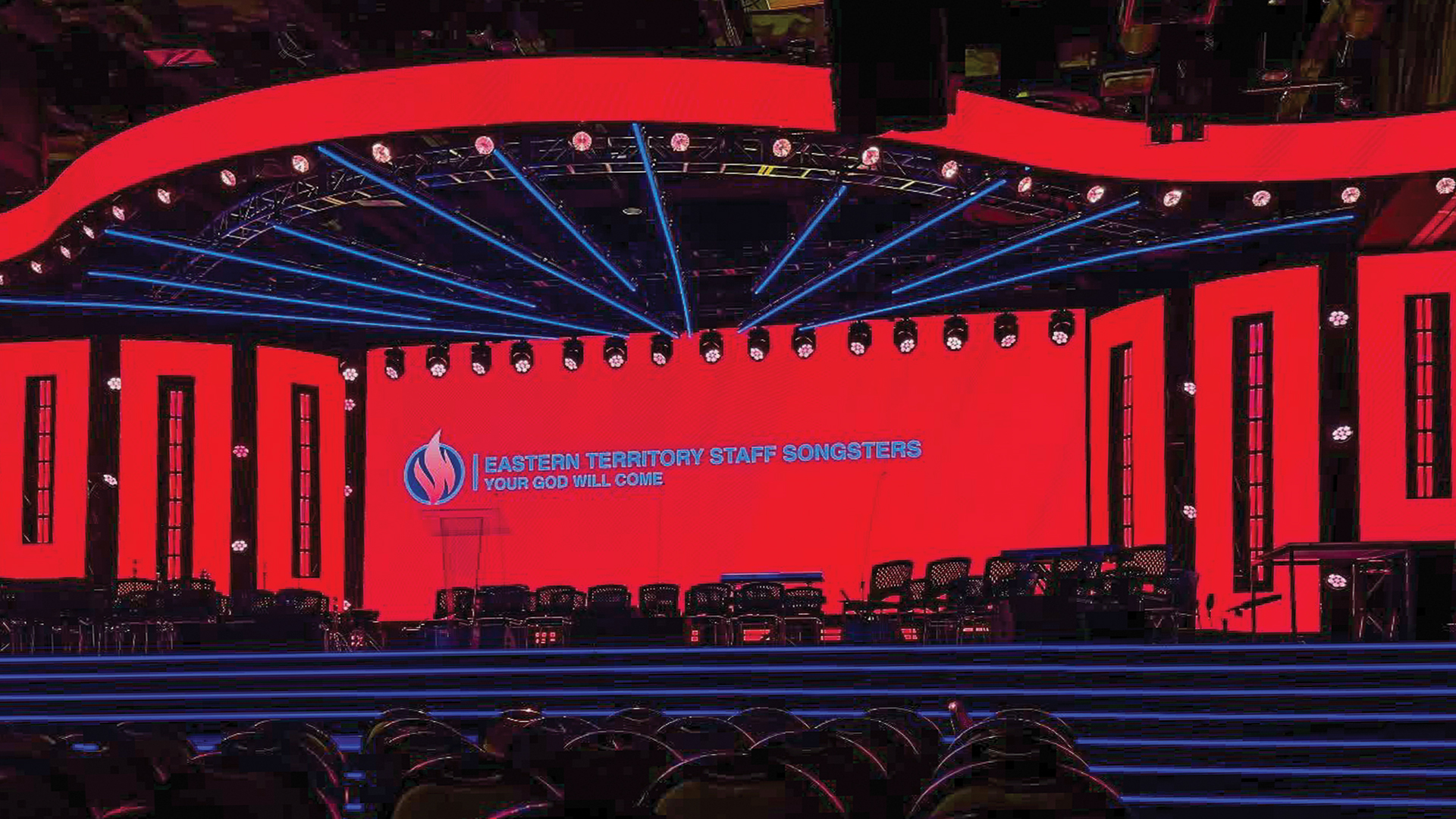
The LED video wall stands as contemporary production’s most impressive canvas millions of pixels assembled into seamless displays capable of transforming any environment. These technological marvels have revolutionized concert touring, broadcast production, and corporate events. Yet they maintain a stubborn independence that occasionally manifests as creative reinterpretation of their assigned content, displaying imagery that bears mysterious relationship to intended programming.
The Pixel Revolution and Its Discontents
LED display technology traces its entertainment origins to the late 1990s, when pioneering manufacturers began producing panels suitable for large-format video. Barco, Daktronics, and later ROE Visual developed increasingly refined products that eventually displaced traditional rear-projection screens for many applications. Today’s premium panels—the ROE Black Pearl, Absen PL Series, and Unilumin UpadIII—achieve pixel pitches below two millimeters, enabling close-viewing applications previously impossible.
This refinement came with complexity. A modern LED wall system involves dozens of individual panels, each containing its own receiving cards, power supplies, and thousands of individually addressable LEDs. The signal chain passes through media servers, video processors like the Brompton Tessera or Novastar MCTRL4K, distribution infrastructure, and finally the panels themselves. Each stage presents opportunities for creative misinterpretation.
The Mysterious Appearance of Unintended Content
Every video engineer has experienced the moment: the media server shows correct output, the processor indicates proper signal reception, yet the wall displays something entirely different. Sometimes it’s yesterday’s content, cached in panel memory and asserting itself unexpectedly. Sometimes it’s test patterns from initial calibration, emerging like ghosts of setup past. Occasionally it’s content from an entirely different source, captured through mysterious signal path contamination.
The disguise media server platform—industry standard for complex projection mapping and LED wall content—includes sophisticated diagnostic tools for this exact reason. The Stage View function shows exactly what the server believes it’s outputting, while feed monitoring confirms signal integrity throughout the chain. When these tools show perfect operation while the wall displays chaos, operators know the problem lies downstream—in processors, cabling, or the panels themselves.
Processor Politics and Panel Personalities
The video processor serves as translator between media sources and LED panels, handling color space conversion, scaling, and distribution across multiple panel outputs. The Brompton Tessera SX40 represents current state-of-art, managing up to eight million pixels while providing frame-accurate genlock synchronization. Its companion Tessera software enables precise panel-level control—when everything cooperates.
Configuration files present particular vulnerability. The panel mapping that defines pixel-to-physical-location relationships can corrupt subtly, creating displays where content appears geometrically correct but spatially scrambled. Imagine a corporate logo with its components scattered across the wall like a visual anagram—technically present, completely unintelligible. These corruptions sometimes occur during transport when processors absorb shock and vibration that affect internal storage.
The Receiving Card Rebellion
Each LED panel contains receiving cards—small computers that interpret processor commands and drive individual LEDs. These cards store local configuration including gamma curves, color calibration data, and brightness mapping. When receiving card firmware becomes corrupted or mismatched across panels, the results create visible discontinuities—sudden color shifts at panel boundaries, brightness variations that create checkerboard patterns, or complete output failure on individual panels.
The NovaStar MCTRL660 and Colorlight X20 processors include utilities for mass receiving card programming, essential for maintaining configuration consistency across hundreds of panels. Yet the programming process itself can introduce errors if interrupted—a power fluctuation during firmware updates creates panels that believe they belong to different walls, displaying content intended for entirely different portions of the physical display.
Signal Path Adventures in Data Distribution
The physical distribution of data to LED panels typically employs ethernet infrastructure carrying proprietary protocols. Fiber optic connections between processors and panels provide bandwidth for high-resolution content, but fiber’s sensitivity to physical stress creates intermittent failures that manifest as visual glitches. A slightly bent fiber connector might work perfectly during setup, then fail under thermal expansion as the venue warms with audience body heat.
The transition from copper to fiber distribution introduced the media converter as another potential failure point. These devices translate between Cat6 ethernet and fiber optic signals, adding complexity to signal chains that already include multiple processing stages. Cheap converters—tempting for budget-conscious productions—often lack proper signal regeneration, creating cumulative degradation that eventually produces visible artifacts.
Content That Never Existed
The most unsettling LED wall behaviors involve displaying content that apparently came from nowhere. Panel memory can retain fragments of previous content, particularly when power-down sequences execute improperly. These fragments combine with current programming to create hybrid imagery—corporate logos overlaid with concert visuals from the wall’s previous deployment, or test patterns bleeding through branded content like digital palimpsests.
Electromagnetic interference presents another source of phantom content. LED walls deployed near high-power RF equipment—radio microphone transmitters, broadcast uplinks, or industrial machinery—occasionally display interference patterns that resemble actual content. The digital signal processing in receiving cards interprets RF noise as valid data, generating imagery from pure electromagnetic chaos.
Historical Perspective: From Jumbotron to Micro-Pitch
The original Sony Jumbotron, introduced in 1985 for the Tsukuba Expo, represented the first large-scale video display technology. These cathode-ray-tube-based systems were relatively simple—and relatively predictable. The transition to LED technology in the 1990s brought exponential improvements in brightness, resolution, and flexibility alongside corresponding increases in complexity and potential failure modes.
Each technological generation introduced new categories of misbehavior. Early LED walls using DIP LEDs suffered from component-level failures visible as individual dark pixels. The SMD (Surface Mount Device) revolution improved pixel density while introducing new failure modes related to thermal management. Today’s COB (Chip on Board) technology and MicroLED panels achieve remarkable image quality while adding complexity to manufacturing and maintenance.
Defensive Strategies for Video Professionals
Experienced video engineers develop systematic approaches to managing LED wall unpredictability. Pre-show procedures include complete signal path verification test patterns that reveal discontinuities, mapping confirmations that verify panel-to-processor relationships, and firmware version audits that ensure receiving card consistency. The Brompton Tessera toolkit and NovaStar VMP software provide diagnostic capabilities essential for this verification.
Redundancy extends beyond backup processors to include spare panels pre-configured for rapid replacement, duplicate fiber runs to critical wall sections, and secondary media server feeds ready for instant switchover. The disguise understudy mode enables synchronized backup servers that track primary output frame-by-frame, ready to assume control if the primary system develops unexpected behaviors.
Embracing the Beautiful Chaos
Despite technological advances, LED walls retain their capacity for surprise. The video production community has learned to prepare for unexplained behaviors while maintaining confidence in systematic troubleshooting. Most ‘mysterious’ displays ultimately trace to explicable causes—configuration errors, hardware failures, or environmental factors. The discipline lies in remaining calm while millions of pixels decide to exercise creative independence.
The next generation of LED technology promises even higher resolution, improved color accuracy, and enhanced reliability. Manufacturers continue refining panel-level intelligence, with some systems now incorporating self-diagnostic capabilities that identify failing components before they affect display quality. Whether this increased intelligence will produce more predictable behavior or simply more sophisticated misbehavior remains an open question—one the industry will answer through continued experience with walls that occasionally show exactly what they want.
