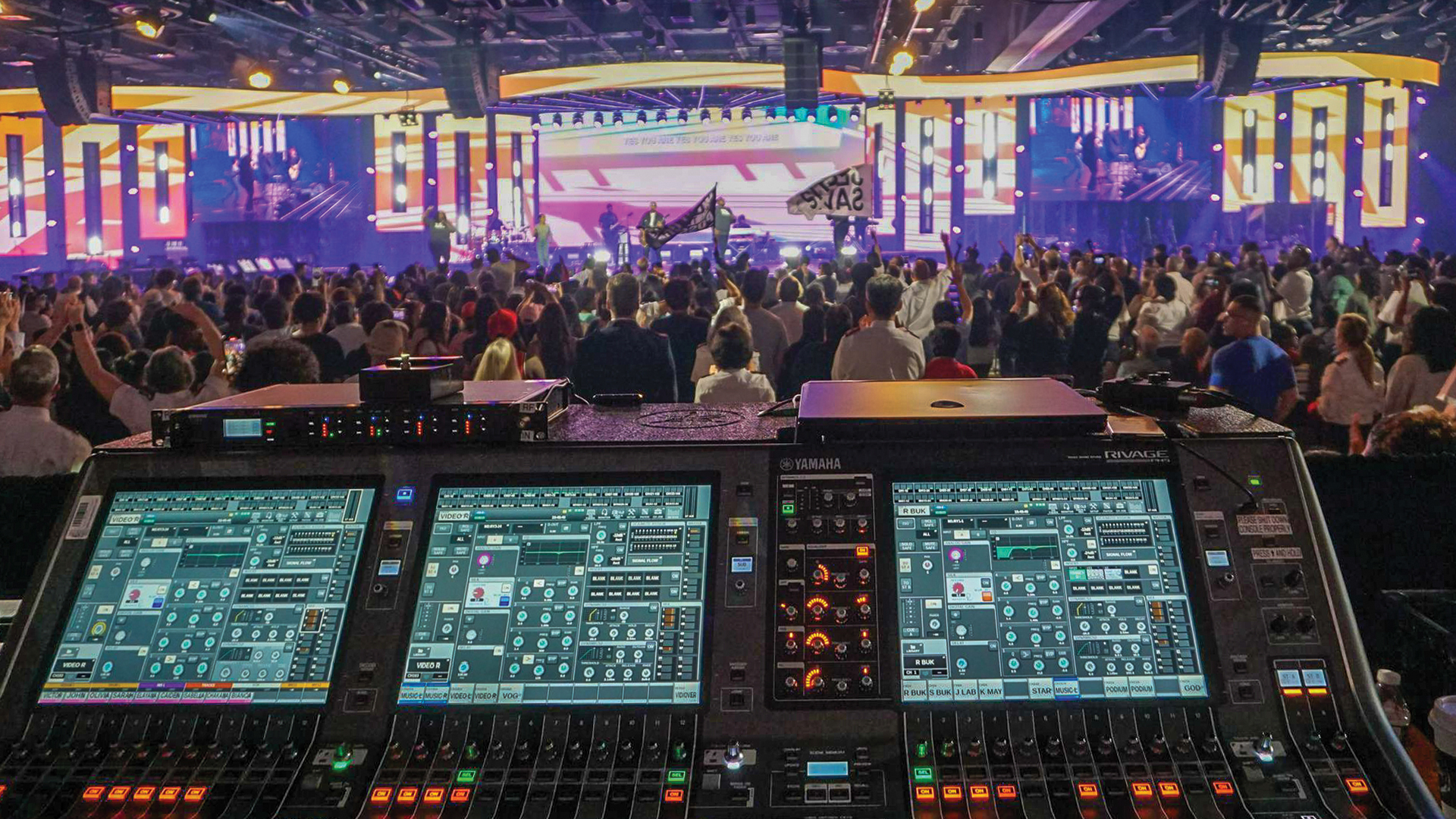
The term fly pack has a specific meaning in AV production that has nothing to do with entomology: it describes a self-contained, airline-shippable production system capable of delivering a broadcast-quality or near-broadcast-quality video and audio output without the full infrastructure of a touring truck-based production. Fly packs are the tool of choice for international corporate events, rapid-deployment broadcast units, and productions in markets where freight logistics make truck touring impractical. Building a fly pack that actually performs is an exercise in ruthless prioritisation and systems engineering.
The Fly Pack Concept: History and Context
The fly pack concept emerged from the broadcast industry in the 1990s, when networks needed deployable field production capability beyond what ENG (Electronic News Gathering) cameras could provide. Satellite uplink trucks were the large-format answer; fly packs were the solution for markets where you couldn’t drive a truck. By the 2000s, corporate AV companies — particularly those working in Asia-Pacific, Middle East, and Latin American markets — had developed sophisticated fly pack systems for product launches, investor presentations, and executive town halls in markets where local rental gear quality was inconsistent. Today, with IP video transport reducing the hardware footprint and cloud-based systems handling processing that once required dedicated hardware, the fly pack has continued to shrink and gain capability simultaneously.
The Weight Constraint: Engineering Around Airlines
Airline freight defines fly pack design more than any other single constraint. IATA regulations for checked baggage impose 23 kg per piece limits for standard passenger routes; excess baggage rates make overweight items economically punishing. Air freight on cargo routes allows heavier items but requires advance booking, customs documentation, and lead times incompatible with fast deployment. The working assumption for most fly packs is: every case must be check-in compliant on a major airline or under 32 kg for excess baggage at manageable cost.
This weight constraint drives every component choice. Pelican Air cases versus standard Pelican 1610/1650 saves 30–40% of case weight. A Mac mini M4 or Mac Studio running Resolume Arena versus a full disguise gx 2c saves 15 kg and three rack units. A Blackmagic ATEM Mini Pro ISO versus a full-size vision mixer saves 8 kg and an engineering position. Each trade-off reduces capability; the fly pack designer’s job is to make those trade-offs at the point where capability reduction is acceptable and weight reduction is maximised.
Core System Components: What Every Fly Pack Needs
A functional AV fly pack for a corporate event environment typically comprises: a video source system — laptop, media server, or hybrid; a vision mixing or video routing solution; signal distribution via HDMI splitters or SDI routing for longer runs; video projection using Christie Boxer or Barco UDX for brightness-demanding events or Epson EB-L1755U for more portable applications; LED tiles in flat-pack form; an audio console such as Yamaha TF1 or Allen & Heath SQ5 for compact deployments or DiGiCo SD11 for more demanding applications; outboard audio as required; and cable infrastructure that handles the specific venue connection types prevalent in the target market.
The cable kit deserves special emphasis. HDMI-to-VGA adapters, USB-C to HDMI, HDMI to SDI converters, multi-pin audio breakouts, and an assortment of impedance matching transformers are the difference between a fly pack that works in any venue and one that arrives to discover the local infrastructure speaks a different connector language. Companies like Decimator Design, AJA Video Systems, and Blackmagic Design produce compact format converters — some as small as a deck of cards — that handle these translation problems without adding significant weight or complexity.
IP Video: The Game Changer for Fly Pack Design
The widespread adoption of NDI, SMPTE 2110, and SRT protocols has fundamentally changed fly pack architecture. A 10GbE switch — weighing under 2 kg — can now route multiple high-quality video streams between devices that previously required dedicated SDI infrastructure. A Blackmagic Cloud Pod or Teradek Prism encodes and decodes broadcast-quality video over IP in a package smaller than a paperback book. The physical cabling requirement — always the heaviest and most logistically complex component of any AV system — shrinks dramatically when the video infrastructure runs over standard Ethernet
Documentation and Customs: The Bureaucratic Infrastructure
A fly pack crossing international borders requires ATA Carnet documentation — an international customs document that allows temporary importation of professional equipment without paying import duties in each country. Preparing the Carnet requires a complete itemised list of every piece of equipment with serial numbers, country of manufacture, and declared values. This list must match the physical contents exactly — customs officers in some markets perform detailed physical checks, and discrepancies create equipment detention that can strand a fly pack in a freight facility while the show date passes.
Power compatibility is a parallel concern. A fly pack designed for UK 230V operation requires step-down transformers in 110V markets (US, Japan, parts of Latin America and Asia). Every PSU in the system should be checked for universal voltage input (100–240V, 50/60 Hz) — most modern laptop and camera PSUs are, but some professional AV hardware is not. The consequences of connecting 230V-only equipment to a 110V supply range from underperformance to immediate hardware failure, depending on the design of the internal power supply.
Deployment Strategy: From Case to Live in Minimal Time
The mark of a well-designed fly pack is not just what it contains but how quickly it can be operational. Productions should aim for a documented setup procedure with a target deployment time — typically 2–4 hours for a standard corporate fly pack — that includes case unpack, rack assembly, cable routing, system power-up, and signal path verification. This procedure should be rehearsed in a controlled environment before the first international deployment, and documented well enough that a qualified AV engineer unfamiliar with the specific kit can follow it under the pressure of a show-day setup. The fly pack that can be deployed reliably by any competent person on the team — not just its designer — is the fly pack that actually earns its air freight bill.
