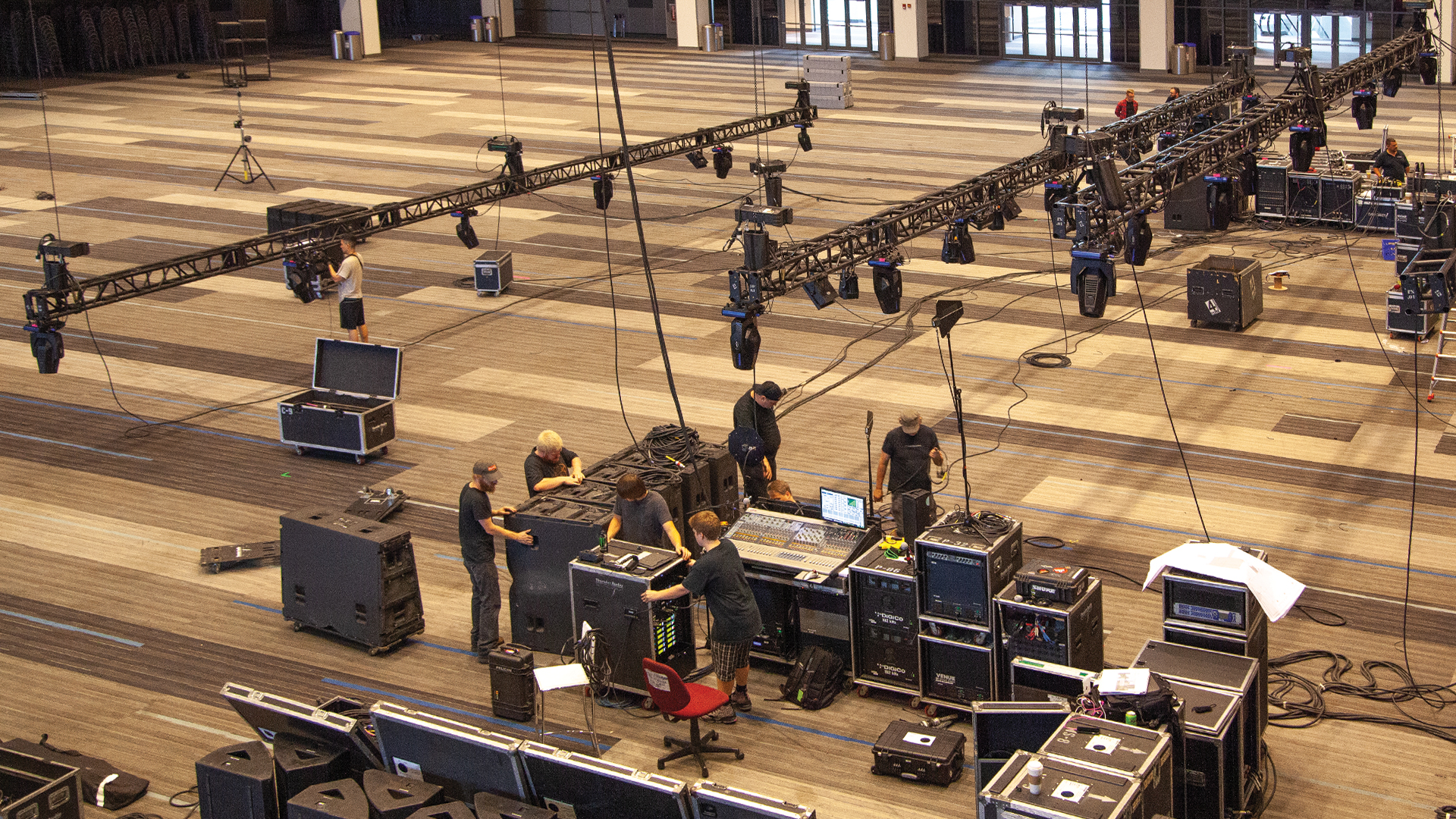
In live event production, time is not just money — it is the difference between a show that runs on schedule and one that unravels in full view of the client and their audience. The changeover — the period between one event’s conclusion and the next event’s commencement in the same space — is one of the most operationally compressed, technically demanding, and logistically complex activities in the production calendar. A conference center hosting simultaneous breakout sessions, a festival stage turning around between headliners, a convention floor transitioning from an awards dinner to an industry breakfast the following morning — in each scenario, the speed, coordination, and precision of the production crew during changeover determines whether the client experiences seamless professionalism or visible operational distress.
The discipline of fast changeover has parallels in manufacturing — Toyota’s SMED (Single-Minute Exchange of Die) methodology, which revolutionized automotive manufacturing changeover times in the 1970s, offers conceptual frameworks that translate surprisingly well to live production logistics. The core principle — that changeover time is reduced by converting internal activities (those that require production to stop) into external activities (those that can be prepared in advance) — is directly applicable to event production workflows.
Pre-Production: Designing the Changeover Before Load-In
The fastest changeover is one that was designed in the production schedule before load-in began. This means creating a changeover plan — a document that specifies exactly what must move, where it moves to, who is responsible for each element, and in what sequence the work proceeds. Without this document, changeover becomes improvised choreography in which every crew member makes independent decisions about priority and sequence — resulting in bottlenecks, collisions, and the maddening discovery that the lighting technician has just repositioned the item the audio team needs next.
Conduct a changeover walkthrough with department heads before the first event. Walk the physical path that each major production element will travel during changeover. Identify critical path items — the elements whose movement must be completed before any subsequent work can proceed — and ensure these are sequenced first in the plan regardless of individual department preferences. The critical path discipline applied to live event changeover is the single most impactful planning tool available.
Crew Briefing and Role Assignment: Clarity as a Speed Tool
Crew speed during changeover is directly proportional to role clarity. A crew member who arrives at the changeover knowing exactly what their first, second, and third tasks are — the specific item, the specific destination, the specific configuration — works at full efficiency from the first second. A crew member who must seek instructions or interpret ambiguous task descriptions works at half efficiency and consumes the time of whoever they’re asking.
The crew briefing before a changeover should be a precisely structured, timed event — 10 minutes maximum, covering: the changeover scope, the sequence of priorities, individual role assignments, the communication protocol (which radio channel or intercom beltpack designation for changeover communications), and the go/no-go decision point at which the changeover leader calls the space ready for the next event. Every crew member should leave this briefing knowing exactly what success looks like for their role.
Standardization: The Foundation of Speed
Professional touring and corporate production companies that execute changeovers efficiently do so through ruthless standardization. Equipment is stored, packed, and deployed in identical configurations every time. Cable coiling standards, case packing diagrams, and stage plot templates eliminate the cognitive overhead of figuring out how something goes together under time pressure. Color-coded labeling systems, standardized road case placement zones on the load-in floor, and equipment inventory sheets attached to every case allow crew members unfamiliar with a specific production to work efficiently within the established system.
Invest in training time for standardization discipline. A crew that knows the company’s cable labeling conventions, understands the modular stage component system (platforms like Staging Concepts SCX system or James Thomas Engineering staging are designed for rapid assembly by trained crews), and has internalized the storage map for production trucks doesn’t just move faster — it moves more safely, with fewer dropped items, fewer damaged connectors, and fewer crew injuries from improvised lifting techniques.
The Role of Technology in Changeover Speed
Modern production technology has made several categories of changeover faster through better engineering. Pre-rigged lighting bars that fly in and out as complete units eliminate the laborious process of individually repositioning fixtures. Automated truss systems with motor-driven height adjustment allow lighting position changes that once took an hour with ladders to be accomplished in minutes. Modular LED wall systems with tool-free panel connections from manufacturers like ROE Visual and Absen reduce panel swap times significantly compared to older bolt-together designs.
On the software side, show file preset management in lighting consoles (grandMA3, ETC Eos) and audio consoles (DiGiCo SD series, Yamaha CL series) allows the complete console state to be saved and recalled for each event, eliminating reprogramming during changeover. Scenes, presets, and show files configured before load-in and tested during rehearsal turn a 45-minute programming session into a 2-minute file recall.
Post-Changeover Verification: The Final Gate
Speed means nothing if the changeover produces a configuration that fails during the next event. Establish a post-changeover verification checklist — a structured walkthrough of critical systems performed by each department head before the space is handed to the client or audience. Audio: check all inputs, confirm levels, verify monitor mixes. Video: confirm all sources, test switcher transitions, verify LED processor outputs. Lighting: recall show state, confirm focus on key positions, verify haze/atmospheric systems. Stage: confirm all scenic positions, verify safety of any rigging, check sight lines from front-of-house positions. The 10 minutes invested in this verification is the insurance policy that protects the entire changeover investment from being undone by a single unchecked connection.
