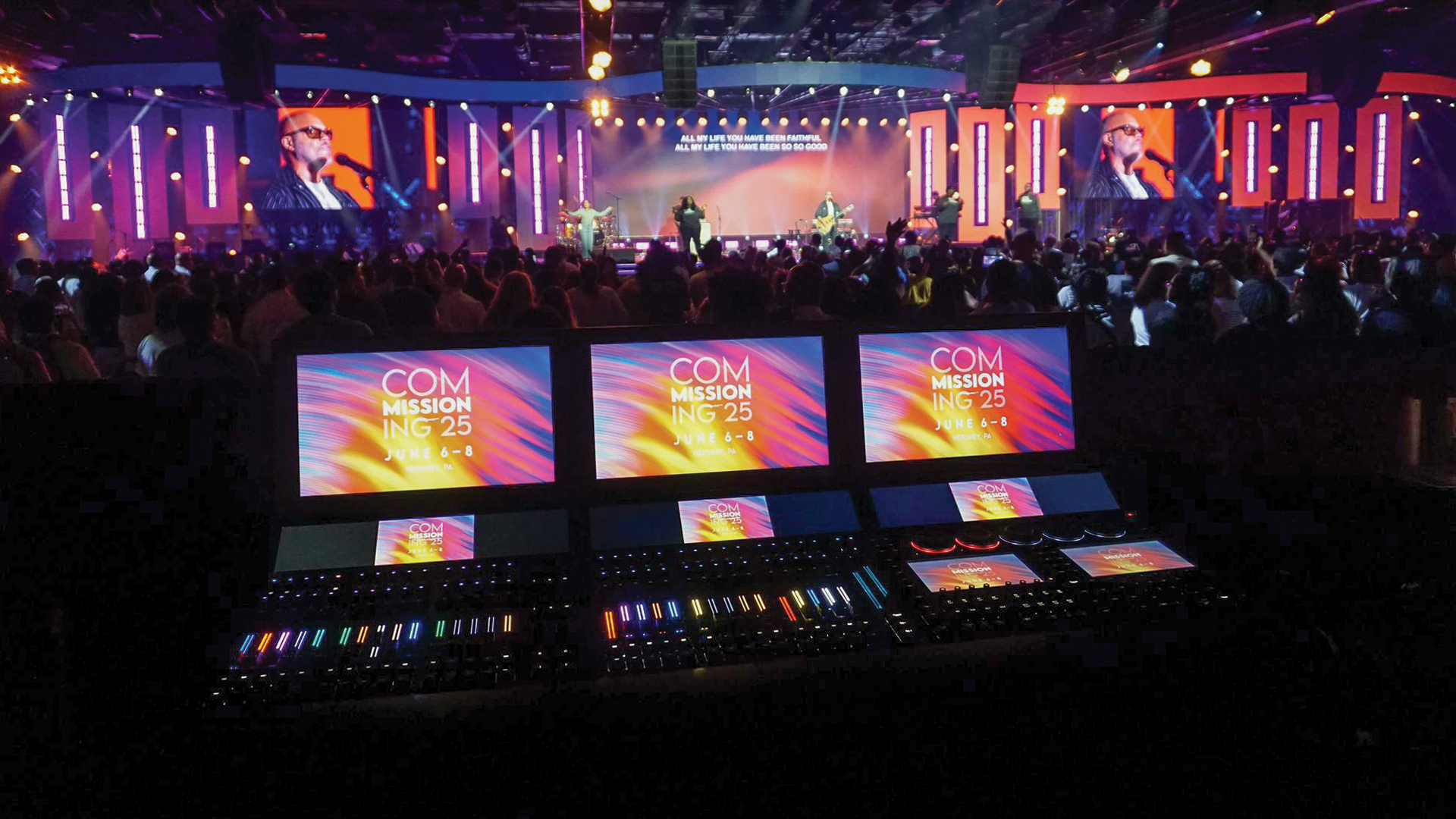
Ask any experienced lighting programmer or video director about overnight sessions and you’ll get one of two responses: a knowing grin or a thousand-yard stare. The overnight programming session is a fixture of live production — simultaneously a rite of passage and one of the most brutally honest tests of whether a creative and technical team can perform under compound pressure. It is not glamorous. It is not the romantic vision of an artist refining their craft through the quiet hours. It is a high-stakes industrial process conducted by exhausted professionals with a live show at the other end of the clock.
Understanding the reality of overnight sessions — why they exist, how the best operators manage them, and what separates a productive session from a chaotic one — is essential operational knowledge for anyone working at a professional level in live production programming.
Why Overnight Sessions Are Structurally Inevitable
The overnight programming session exists because production schedules are compressed by economics. Venue rental costs, crew day rates, and the logistics of building a production in a venue that has other uses create a situation where the creative programming work — inherently iterative, time-consuming, and stage-dependent — gets pushed to the only window when the stage is quiet and available: the hours after midnight.
In the corporate event world, this dynamic is especially acute. A stage may be shared between a conference during the day and a general session build at night, with tech rehearsal beginning at 7am. The lighting programmer and video director may have six hours to build a complete show from scratch on a stage they’ve never walked. In touring, overnight sessions typically occur during the production advance period before a tour opens, when the rig is freshly installed and the creative team has one shot to build the show file before it has to execute reliably every night for months.
Cognitive Performance Under Sleep Deprivation
By 2am in an overnight session, the human brain is operating on depleted cognitive reserves. Sleep deprivation research is unambiguous: decision-making quality and pattern recognition degrade measurably after 18 hours of wakefulness. For a programmer working in grandMA3 or ETC Eos, this manifests as slower recall of keyboard shortcuts, a tendency to make palette-level decisions that seem correct at 3am but read wrong in rehearsal, and a reduced ability to anticipate the downstream consequences of individual programming choices.
The most experienced programmers in live production develop deliberate strategies for managing this degradation. The primary technique is front-loading complex creative decisions — the show’s visual language, key lighting moments, color palette, primary movement vocabulary — to the early hours of the session when mental capacity is still near normal. Mechanical tasks — building sequences, duplicating effects, organizing groups, labeling cues — get deferred to the late hours when creativity is depleted but procedural execution is still functional.
Building a Session Plan That Actually Works
A professional overnight programming session begins with a session plan built during daylight hours. This document breaks the show into segments, assigns time estimates to each programming block, accounts for notes sessions with the creative director, and sets hard boundaries around the end of the session to protect minimum rest time before the show call.
For a six-hour overnight session on a mid-scale corporate show using an Avolites Sapphire Touch or grandMA3 full-size, a realistic allocation looks like: 45 minutes for system check and show file setup; 90 minutes for key looks and static scenes; 60 minutes for movement programming and effects; 90 minutes for sequence and timeline assembly; 30 minutes for notes implementation; 45 minutes for final save, documentation, and handoff. The programmers who succeed at overnight sessions are those who hold themselves to this structure even when the creative director is requesting a 47th iteration of a single cue.
The Video Director’s Parallel Challenge
While lighting programmers work within a structured cue-building workflow, the video director in an overnight session faces a different set of challenges: content integration, playback system validation, and real-time problem-solving when the content that looked correct on a client monitor turns out to look completely different mapped to a large-format LED wall at actual show scale. Colors shift, details get lost or become overwhelming, and aspect ratio issues invisible in the approval process reveal themselves at production scale.
Systems built around disguise d3 servers, Resolume Arena, or Green Hippo Hippotizer all demand that the video director manage the overnight session simultaneously as a technical integration exercise and a creative review process. Content that arrives late — a common occurrence — compresses this window further, and the media server’s output processing layer becomes the only available tool for corrective adjustments that the client won’t approve a content revision to fix.
Communication Protocols That Survive Exhaustion
The interpersonal dynamics of an overnight session are one of the most challenging aspects of the discipline. Exhaustion amplifies frustration on all sides. The creative director who was collaborative at noon becomes less patient about requests at 3am. The programmer who accommodated every revision at the start of the session starts pushing back at hour five. These are not character failures — they are predictable physiological responses to sleep deprivation that experienced production managers plan for.
The most effective productions set explicit communication agreements before the session begins: who has final creative sign-off authority, how notes will be delivered (through a dedicated production coordinator, not through direct verbal interruption at the console), and what constitutes a revision that stops the session versus a note that gets addressed in a subsequent pass. These agreements feel bureaucratic in planning and become operationally essential by hour four.
Save Discipline and Version Control
Show file save discipline during overnight sessions is non-negotiable. A programmer who loses two hours of work to a software crash or an accidental overwrite at 4am does not recover that ground before an 8am call. The professional standard is a timestamped save every 20 to 30 minutes, with each file clearly labeled with show name, date, and version number. Configure both grandMA3’s automatic backup system and ETC Eos’s archive function before the session begins — they run in the background and require no discipline to execute once set up.
For video systems, disguise’s project versioning and Resolume’s composition backup should be configured with equivalent rigor. A dedicated portable SSD for backup files is standard practice on any critical overnight — it adds nothing to setup time and is insurance against a storage failure that would otherwise end the production before it begins.
Physical Environment and Crew Welfare
The physical environment of an overnight session affects output quality in ways that are rarely discussed but universally experienced. A cold stage where programmers are working in jackets produces worse work than a comfortable one. Poor lighting at the programming desk causes eye fatigue that compounds decision-making errors. The absence of food and water after midnight is a measurable performance degradation factor that responsible production operations address as a standard budget line, not an individual accommodation.
The most forward-thinking production managers build overnight provisions into the event budget: craft services running through the session, a designated rest area for crew members not actively programming, and a hard end-of-session call enforced regardless of what remains on the notes list. A show programmed by a crew that got four hours of rest before call is almost always better than one where the programmer fell asleep at the console at 6am. The notes list will survive the night. The show quality will not survive an operator who cannot function.
